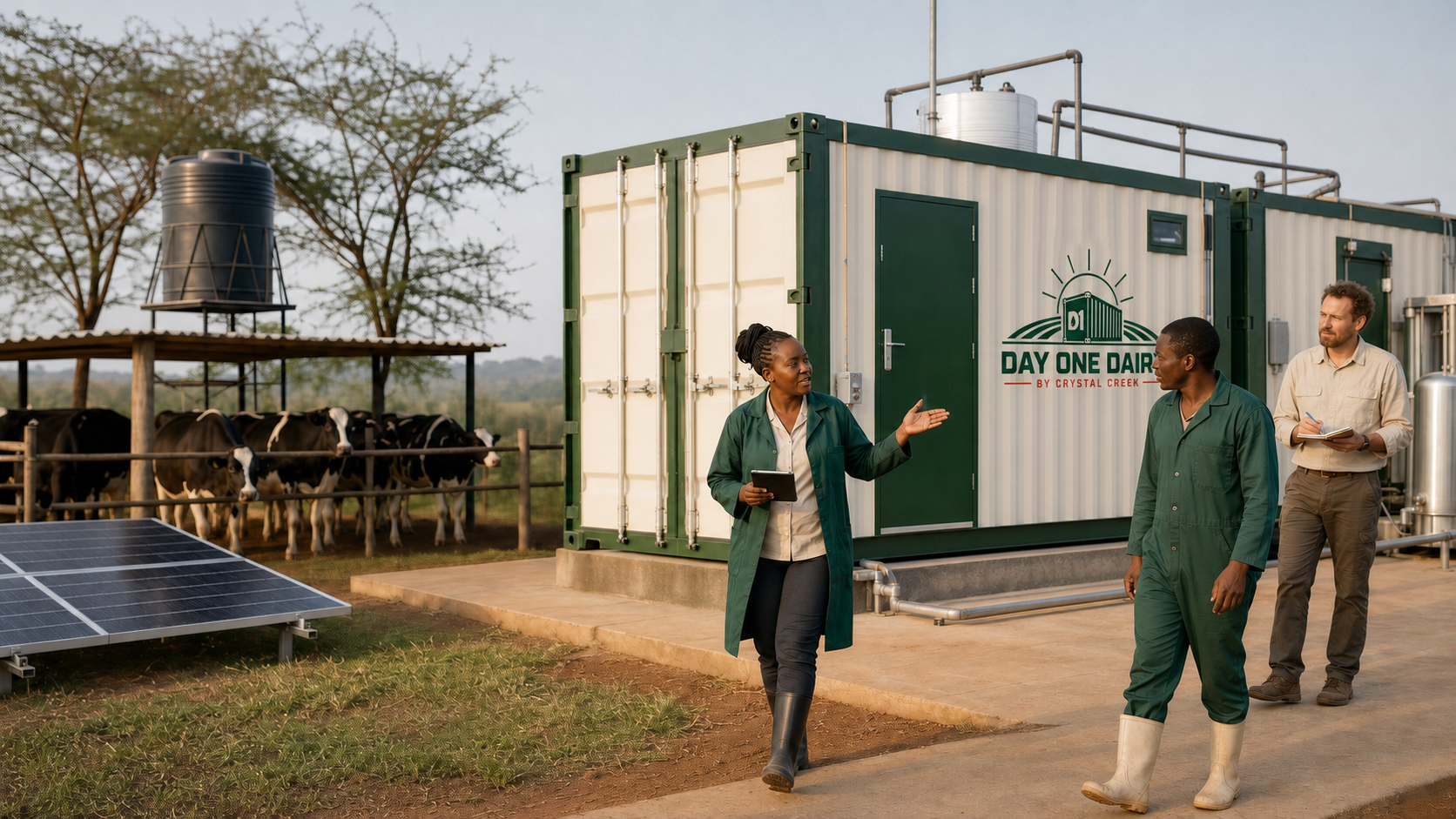
Named operators and supervisors are part of the scope from the start.
NGO and cooperative dairy systems
A local production asset designed to outlast the project launch.
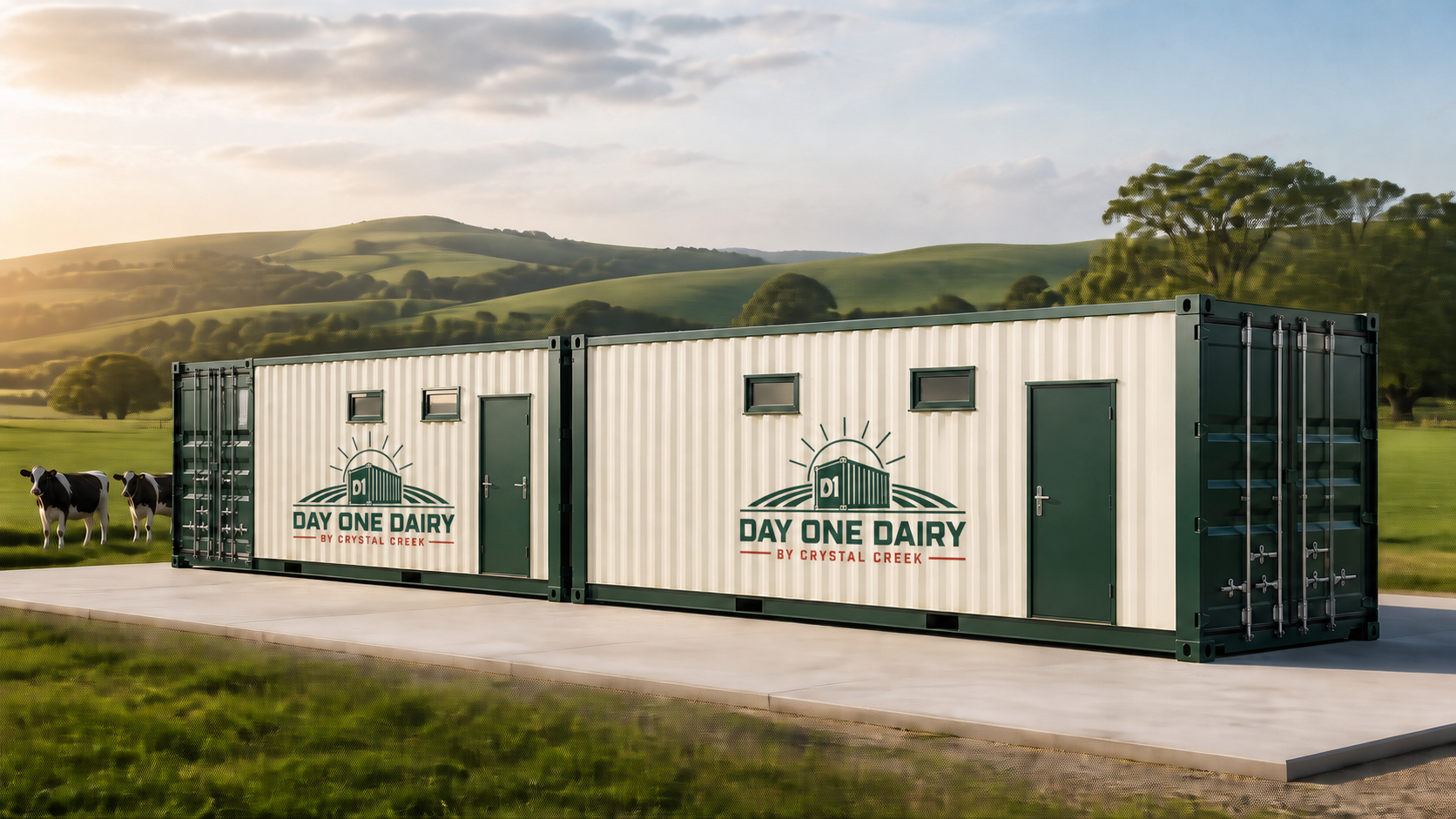
A dairy system for an NGO or cooperative must be more than donated equipment. It needs a reliable milk supply, local ownership, realistic products, utilities, trained operators, sanitation routines, maintenance responsibility, market access and a measured handover. Day One Dairy provides a configurable production platform around which those local capabilities can be built.
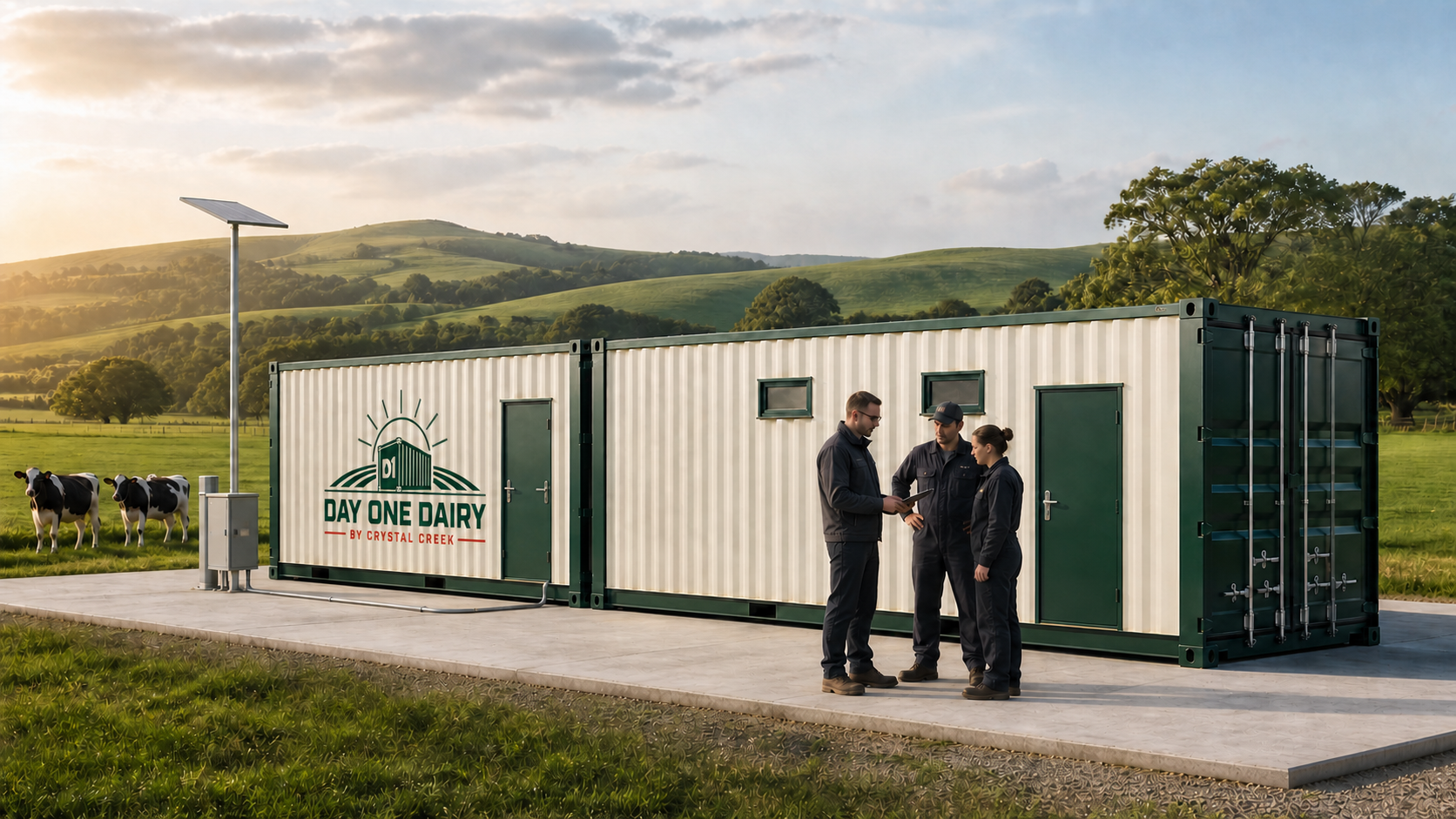
Handover, spares, records and measurement are planned with the equipment.
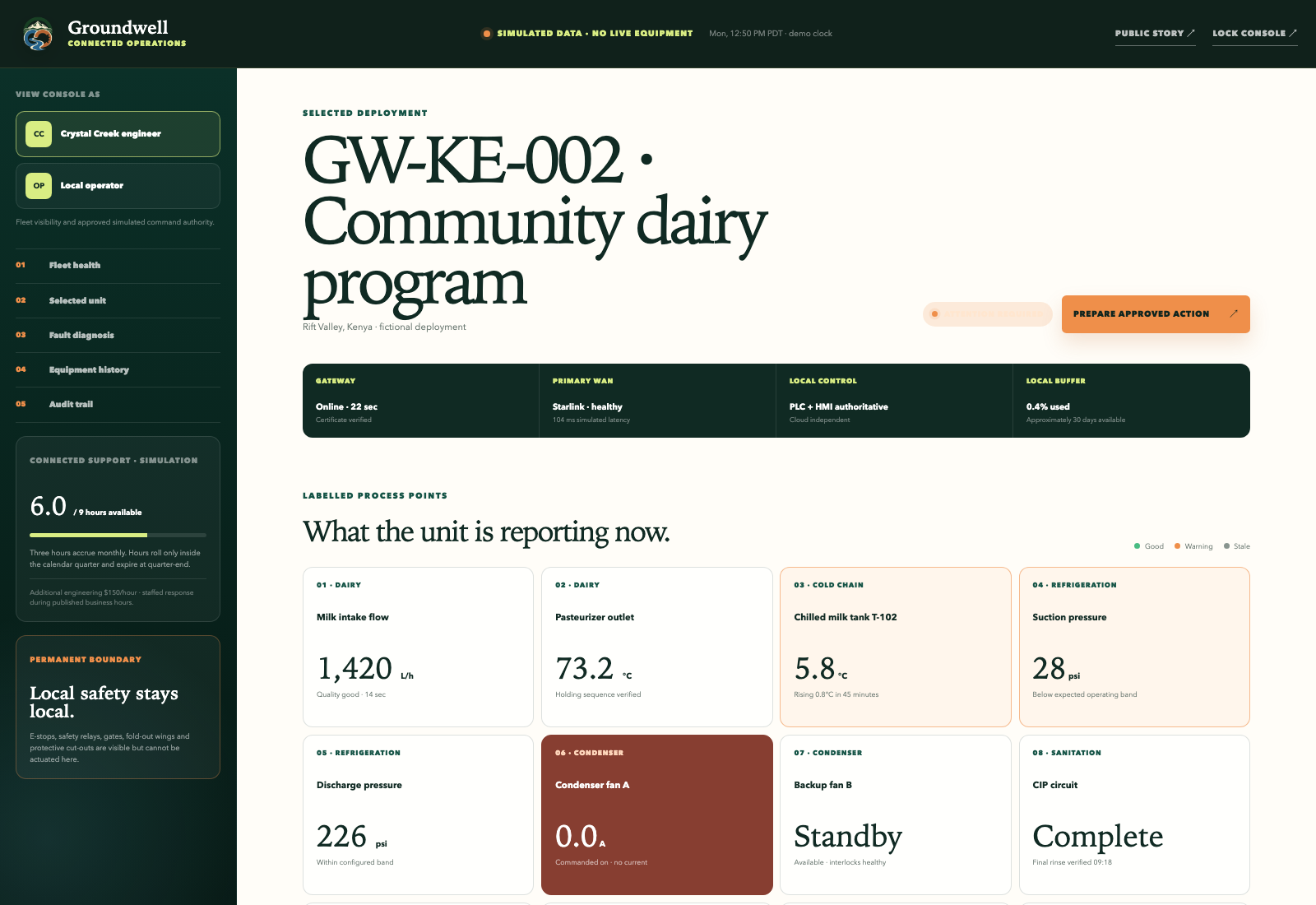
Local controls can be paired with remote Crystal Creek visibility and diagnosis.
Program design
Begin with milk, people and market—not a predetermined machine list.
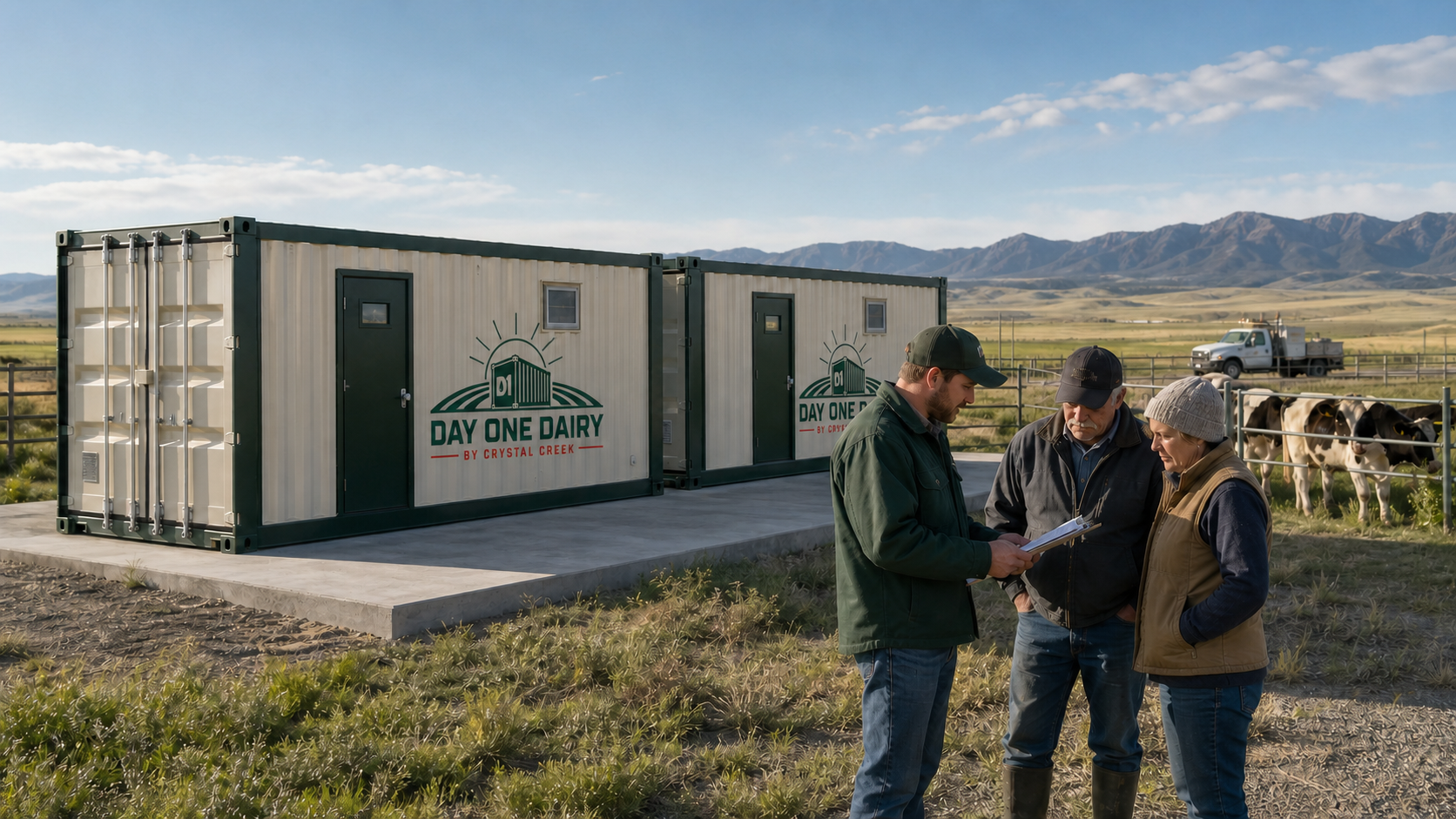
A viable program needs enough consistent milk, a trusted local operator, products people will buy or institutions will use, safe water and power, wastewater responsibility and an organization accountable for daily performance.
Crystal Creek uses the operating brief to configure the module and identify what remains a local or program-partner responsibility. That makes gaps visible before fabrication rather than after the system reaches its destination.
- Milk-supply assessment
- Local governance and ownership
- Product and market plan
- Utilities, approvals and environmental review
Operating independence
Training and maintainability belong in the product scope.
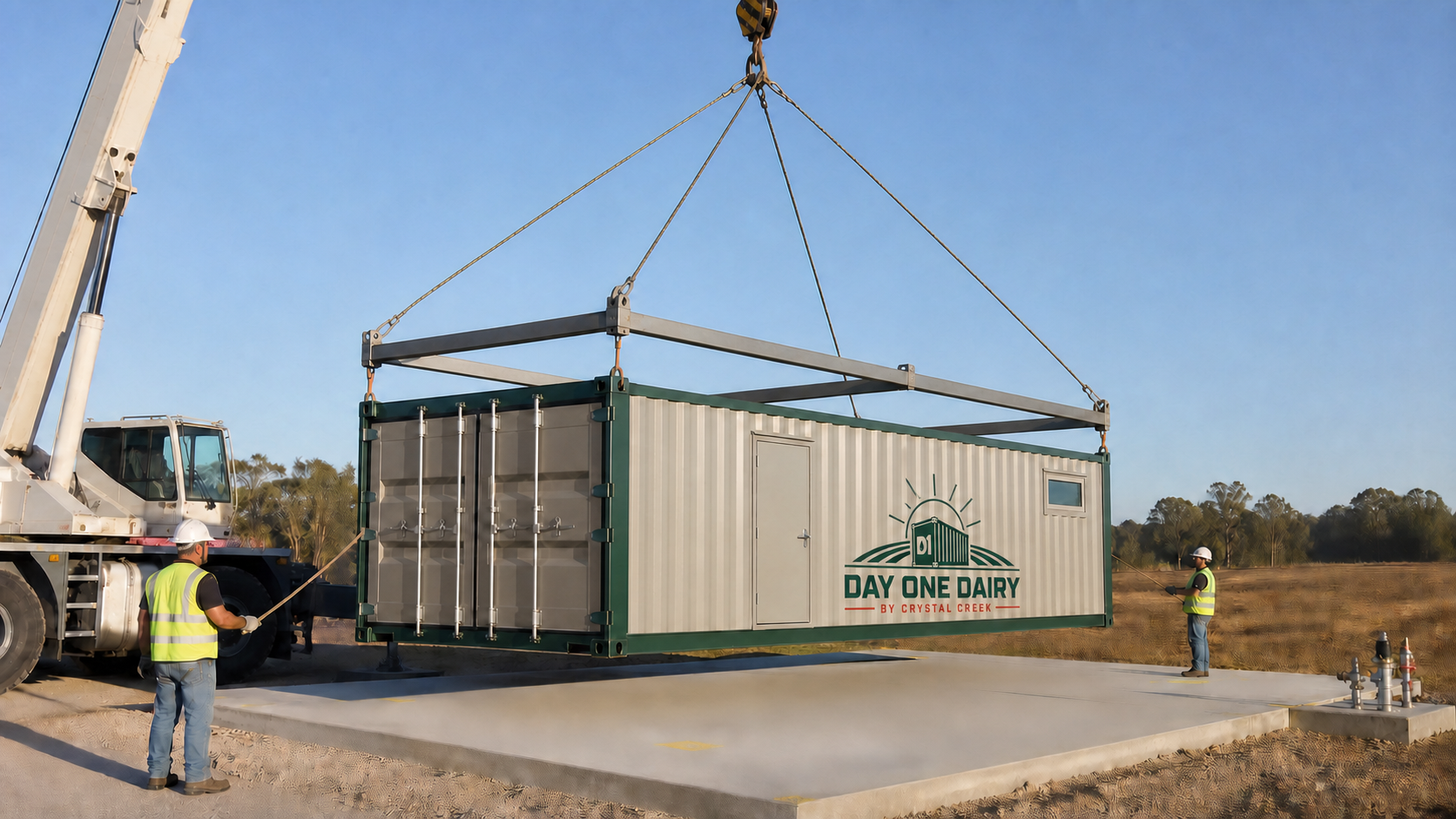
An installation is not a handover. Operators need routines for receiving, processing, cleaning, verification, records and escalation. Supervisors need to know who owns spare parts, preventive maintenance, consumables and decisions when a reading is outside its approved range.
Day One Dairy documents the configured equipment, labels important points and trains against the actual line. Connected Operations can add remote visibility and experienced diagnosis, while the local PLC, HMI, manual controls and safety systems remain authoritative when internet service is unavailable.
- Configured operating procedures
- Labelled service points
- Spares and escalation pathway
- Offline local operation
Evidence and growth
Measure useful operating outcomes, then expand deliberately.
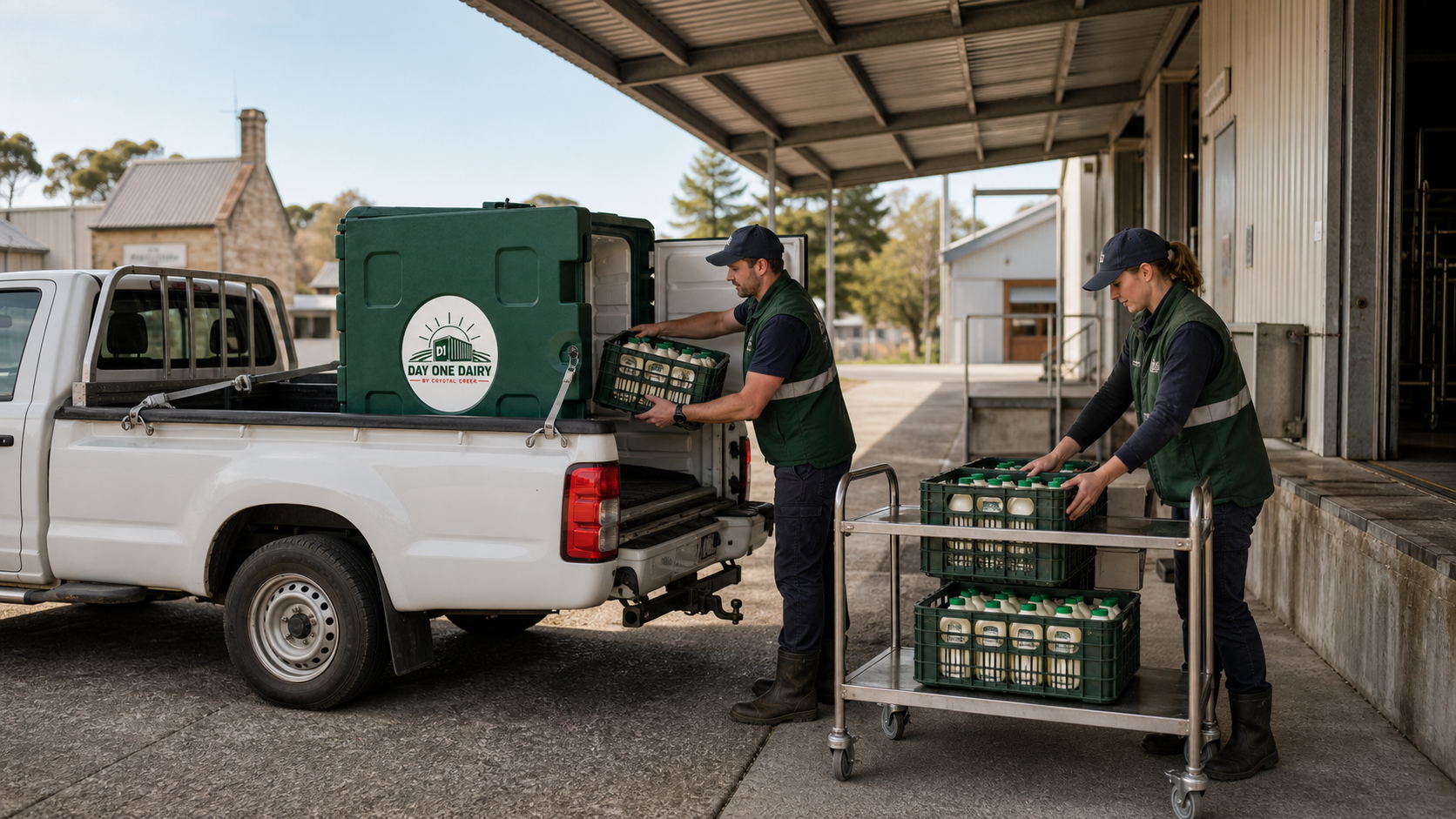
A food-security project should define what success means before delivery: accepted milk volume, batches completed, temperature compliance, sanitation completion, downtime, local operator proficiency, product loss and route-to-market performance are examples that can be adapted to the program.
Once core operation is stable, the product family can extend into creamery production, smaller-livestock programs or portable cold chain. Expansion should follow evidence and local demand rather than a generic promise of impact.
- Operating and quality measures
- Transparent responsibilities
- Evidence-based expansion
- Local distribution and cold-chain planning
Related Day One capability
Day One Connected
See how local control and remote Crystal Creek expertise work together.
Explore Day One Connected ↗Questions buyers ask
Direct answers, with the boundaries included.
Final performance, equipment and approval requirements are confirmed in the project scope.
Who can own and operate an NGO dairy system?+
The receiving model may be a cooperative, local company, nonprofit partner, institution or public entity. The important requirement is a named organization with authority and resources for operators, utilities, sanitation, maintenance, records and market coordination.
Can Day One Dairy work where internet service is unreliable?+
Yes. Local controls, manual operation and safety systems do not depend on the cloud. When Connected Operations is included, the gateway is designed to buffer data during an outage and synchronize after connectivity returns.
Does the system guarantee a food-security outcome?+
No equipment can guarantee that outcome. Results depend on milk supply, governance, utilities, training, maintenance, market access and long-term local ownership. Day One Dairy provides the production platform and implementation framework.
Can one program deploy multiple sites?+
Yes, a repeatable product architecture can support a multi-site program, but each destination still needs its own site, utility, climate, approval, operator and logistics review.
Bring us the operating brief
Turn the research into a practical scope.
Tell Crystal Creek about the milk supply, products, site, utilities, destination and local team. We will identify the right next step without pretending one configuration fits every project.
Book a project call ↗Or call 971-626-1616