
Site evidence and utility readiness are reviewed against the configured module.
Containerized dairy site requirements
The commissioning clock starts with a genuinely prepared site.
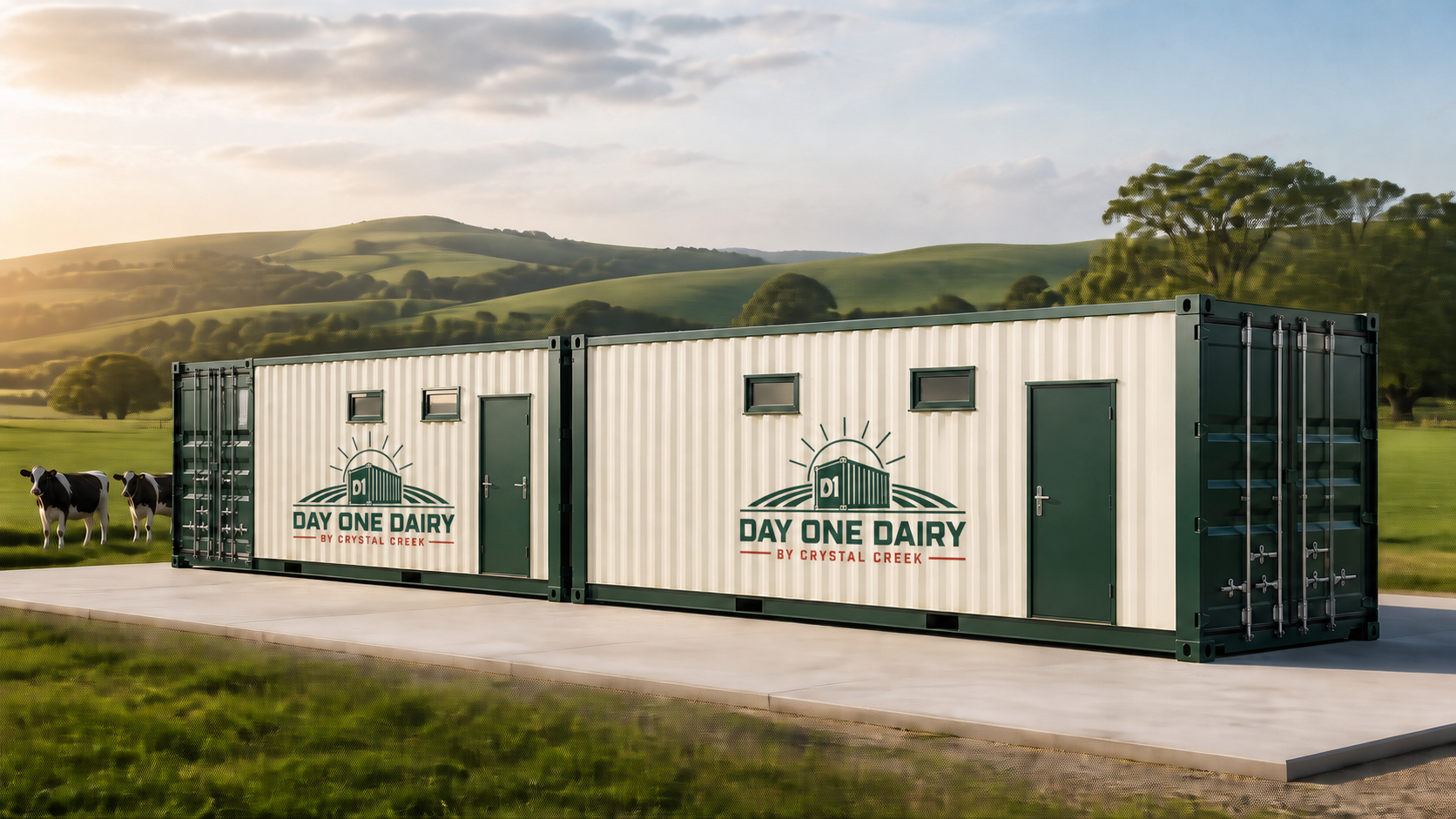
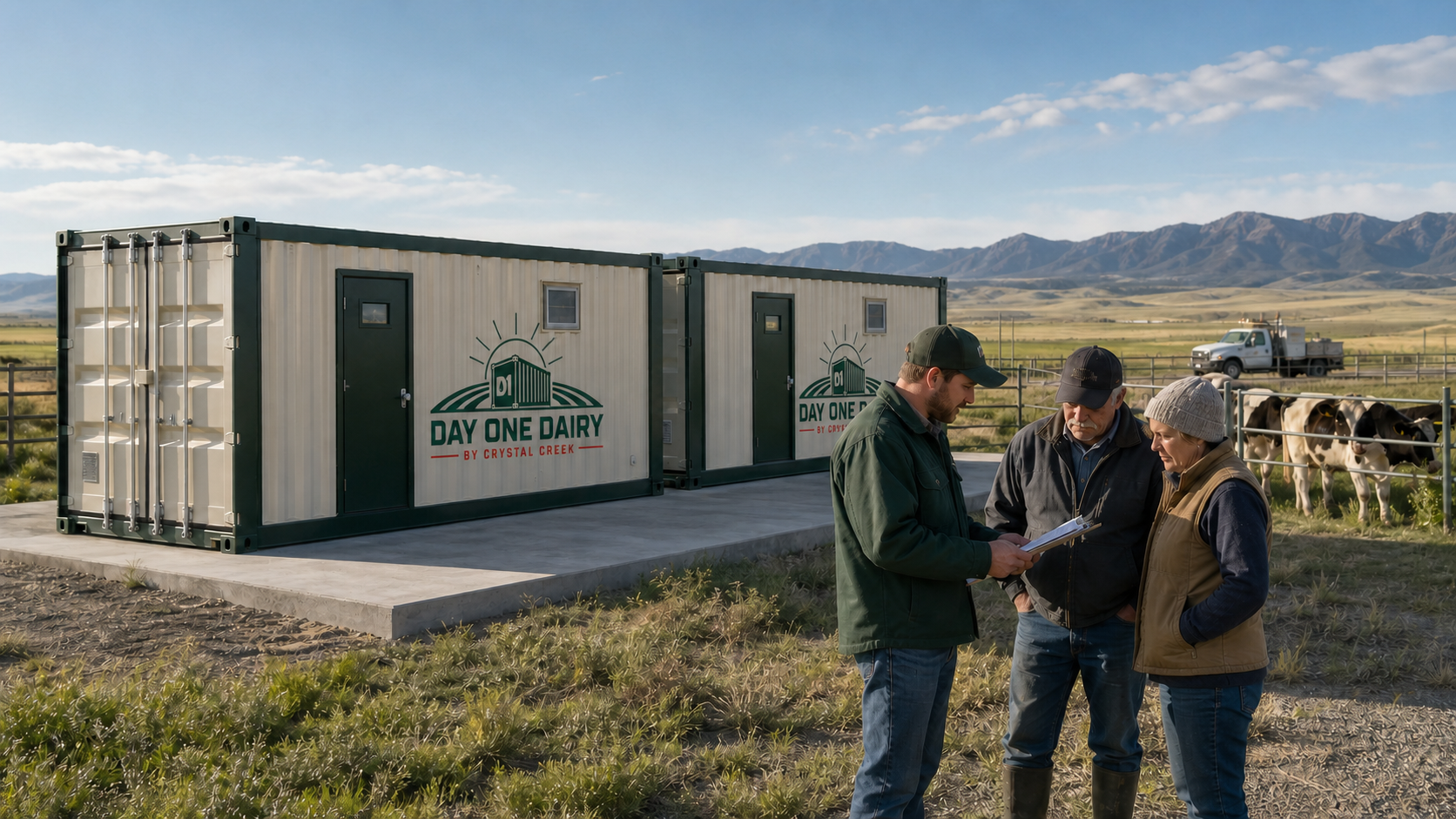
A containerized dairy site typically needs verified delivery access, an engineered support surface, a lifting and placement plan, destination-appropriate power, potable or approved process water, drainage and wastewater handling, protected connections, local inspections and trained operators. Exact loads, flows and connection details come from the final engineered equipment schedule—not a generic checklist.
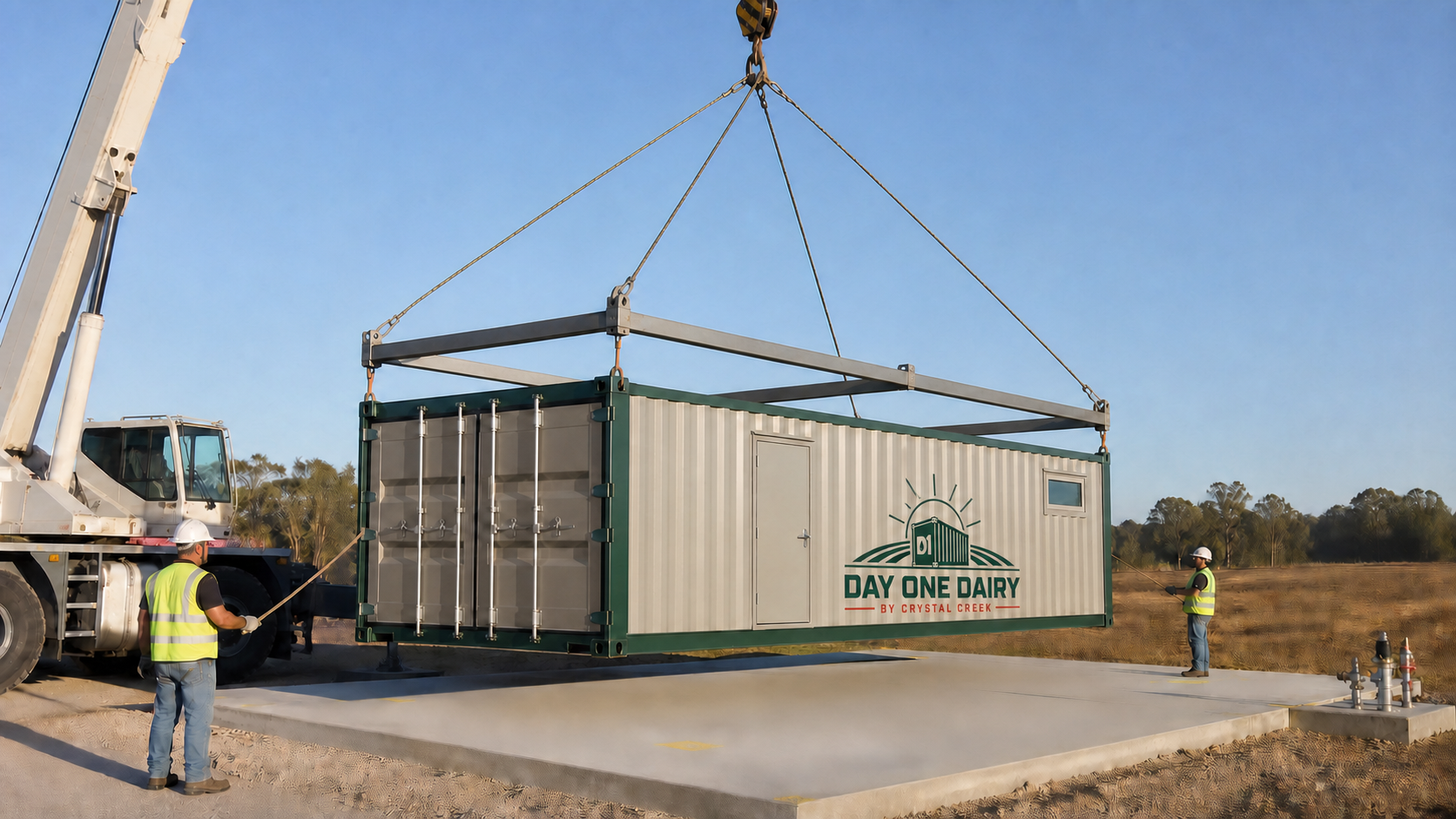
Access, equipment, bearing surface and placement sequence must be confirmed.
Inspections, sanitation checks and operator handover must be complete.
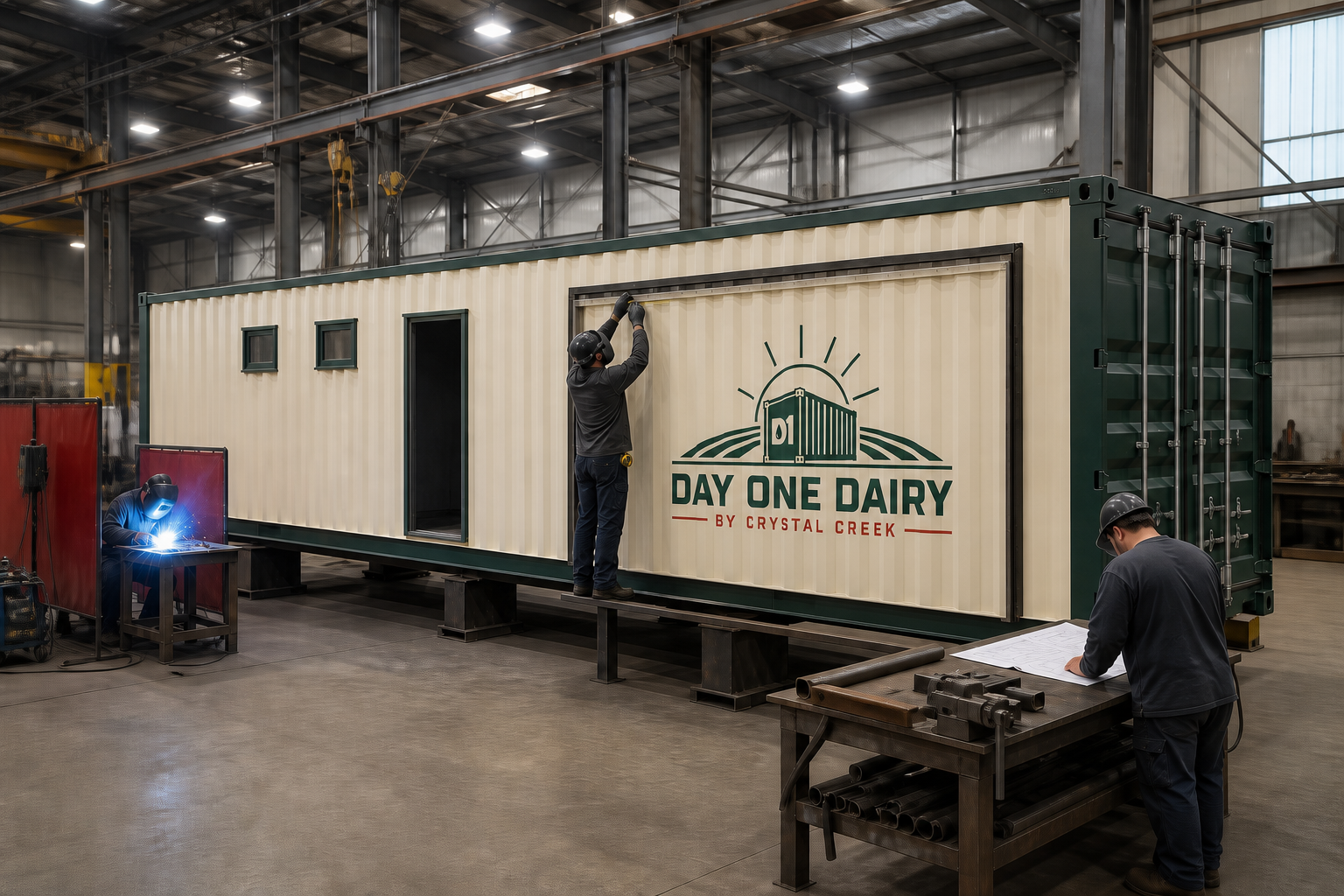
Civil and logistics
Make room for the truck, the lift and the operating footprint.
The route to the final position must be checked for width, height, turning radius, grades, ground conditions and seasonal access. The support design must account for the configured module, operating loads and local structural requirements.
Placement planning also includes crane or lifting equipment, exclusion zones, connection access and any deployed canopy, cattle-handling or service area. These details are resolved before the delivery team arrives.
- Route and turning review
- Engineered pad or support plan
- Lift plan and exclusion zone
- Operating and maintenance clearances
Utilities and environment
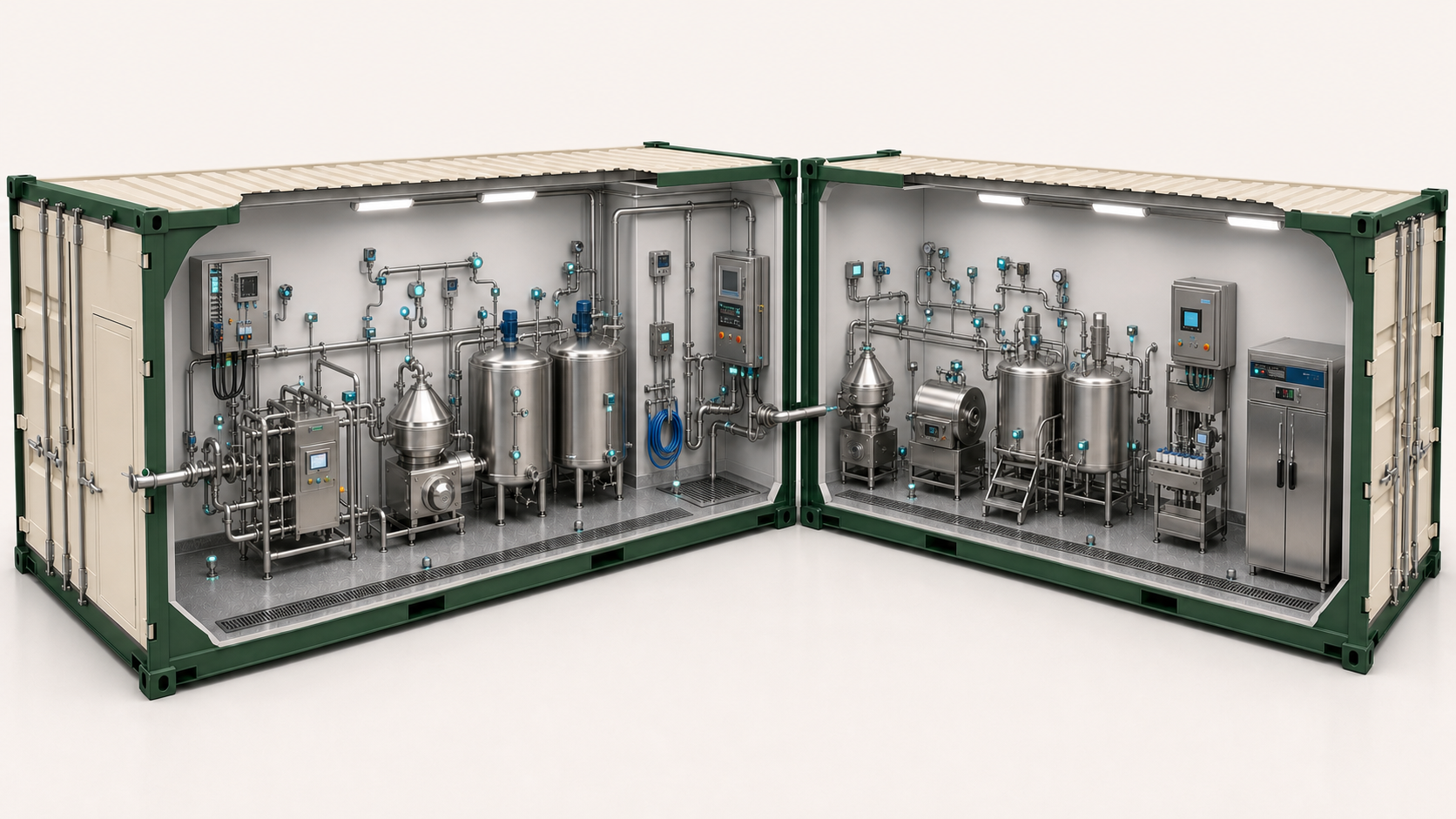
Power, water, drainage and cooling are part of the process design.
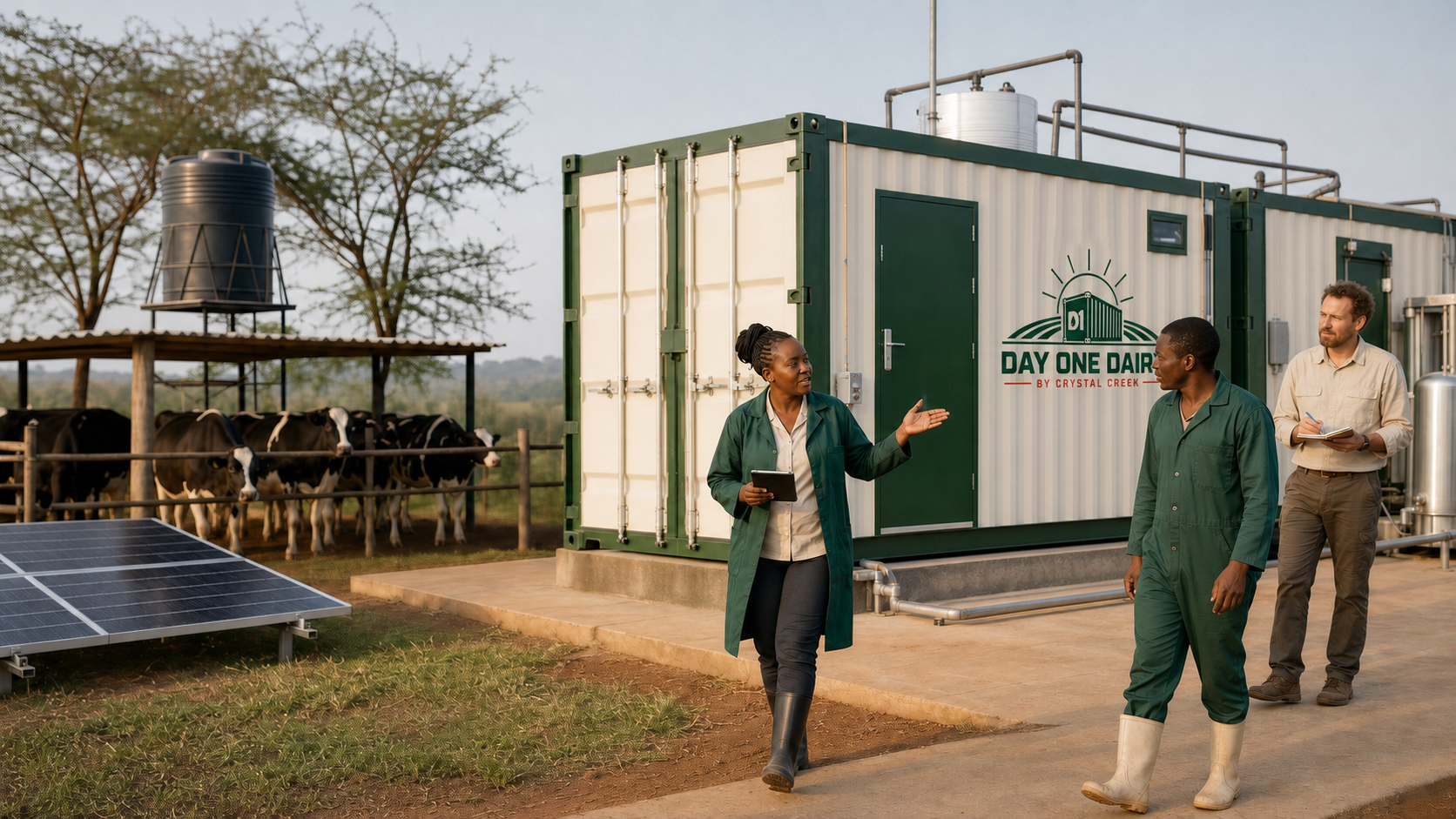
Utility requirements depend on pasteurization method, vessel size, refrigeration duty, climate, cleaning method and production schedule. Crystal Creek supplies the project connection schedule after the equipment scope is defined.
The receiving partner is responsible for destination-side services unless the signed scope says otherwise. Water quality, backflow protection, wastewater discharge, weather protection, ventilation and backup-power needs must be reviewed with the appropriate local professionals and agencies.
- Verified electrical supply and protection
- Approved water source and quality
- Drainage and wastewater pathway
- Climate and backup-power review
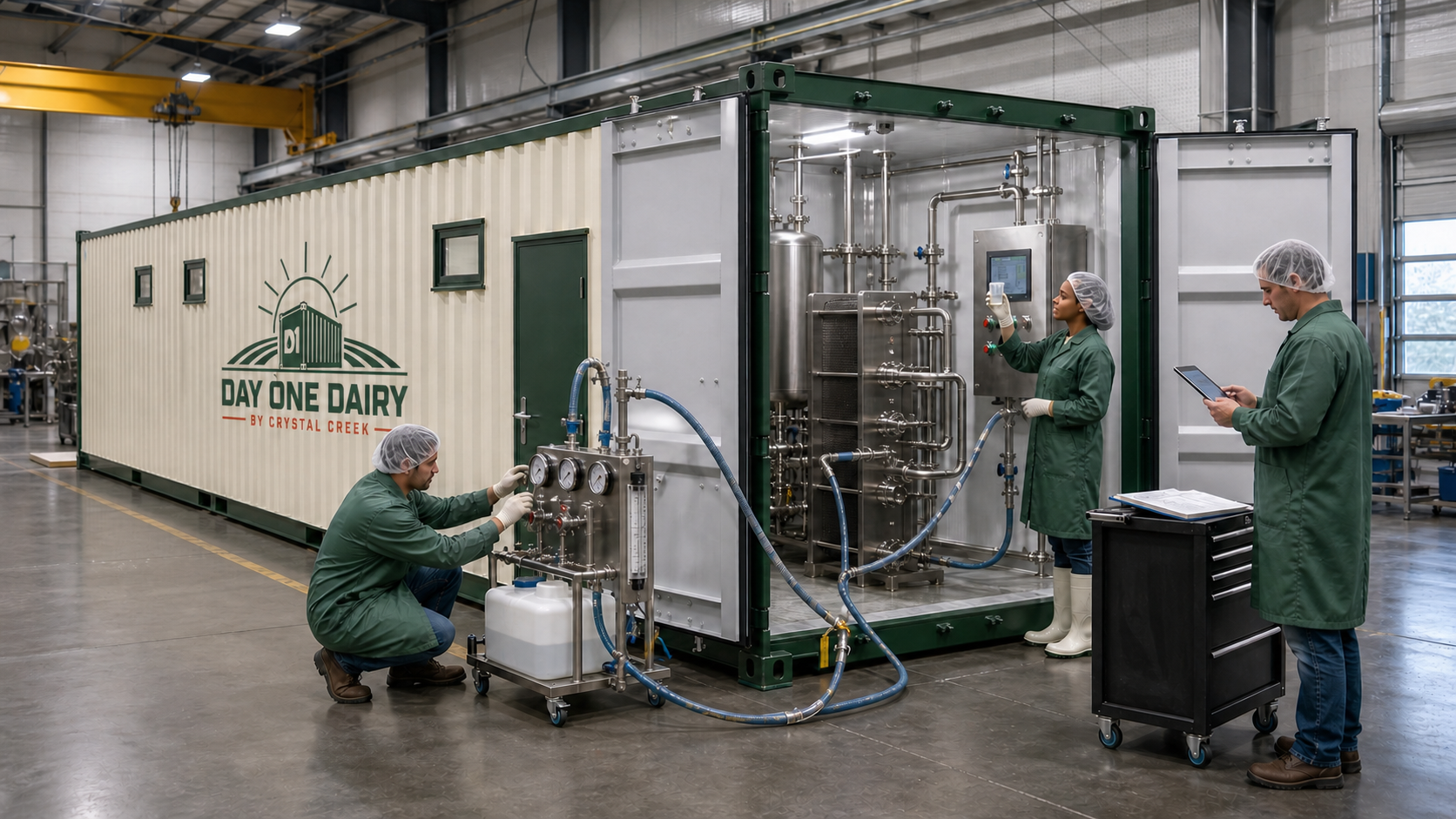
People and permission
A ready module still needs approved operation and a prepared team.
Permits, food-safety review, inspections, sampling or laboratory arrangements and operating authority vary by jurisdiction and product. Crystal Creek supports the equipment documentation and configured system scope; the owner and local professionals establish the destination approval pathway.
Named operators should participate before delivery. Commissioning confirms installation and configured operation, but ongoing success depends on daily records, sanitation, preventive maintenance and an understood escalation route.
- Destination approval pathway
- Inspection and sampling plan
- Named operators and supervisors
- Sanitation, maintenance and record ownership

Related Day One capability
Day One Milk
Review the module whose final equipment schedule defines the site interfaces.
Explore Day One Milk ↗Questions buyers ask
Direct answers, with the boundaries included.
Final performance, equipment and approval requirements are confirmed in the project scope.
How much power does a containerized dairy need?+
There is no safe universal figure. Power depends on process method, throughput, refrigeration duty, pumps, controls, cleaning equipment, climate and any backup strategy. The project electrical schedule is issued after the configured equipment is selected.
Does Day One Dairy provide the concrete pad?+
Site work is destination-specific and is not assumed to be part of the base module. Crystal Creek provides configured loads and interface requirements; the signed scope identifies who designs and completes the local foundation or support surface.
What does one-day commissioning require?+
The delivery route, pad, lift, utilities, connections, drainage, inspections, sanitation readiness and operators must be ready before arrival. The statement is a prepared-site objective, and actual timing depends on the project.
Who handles permits and dairy approvals?+
The deployment owner and relevant local professionals or agencies control local approvals. Crystal Creek supports the process with configured equipment information, drawings and documentation defined in the project scope.
Bring us the operating brief
Turn the research into a practical scope.
Tell Crystal Creek about the milk supply, products, site, utilities, destination and local team. We will identify the right next step without pretending one configuration fits every project.
Book a project call ↗Or call 971-626-1616